Prostacyclin therapy is an established, efficacious treatment for patients with PAH1,2
THE ROLE OF PROSTACYCLIN THERAPY AND ITS CLINICAL
BENEFIT FOR PATIENTS1,2
Prostacyclin therapy addresses the underlying pathophysiology of PAH by1,2:
- Inducing vasodilation of pulmonary arteries
- Inhibiting platelet aggregation
- Exerting anti-proliferative and anti-inflammatory effects
Clinical benefits of prostacyclin therapy are well established and include1,2:
- Reduction in symptoms of PAH
- Improved prognostic measures of risk, such as exercise capacity and functional class
- Delayed disease progression
A RETROSPECTIVE ANALYSIS REPORTED LOW PROSTACYCLIN USE AMONG THE 13,633 PATIENTS WITH PAH WHO WERE ANALYZED3
In patients with PAH in the Truven Medicare and Commercial databases (N = 13,633)*
Prostacyclin use across calendar-year cohorts ranged from 19.9% to 22.6%.
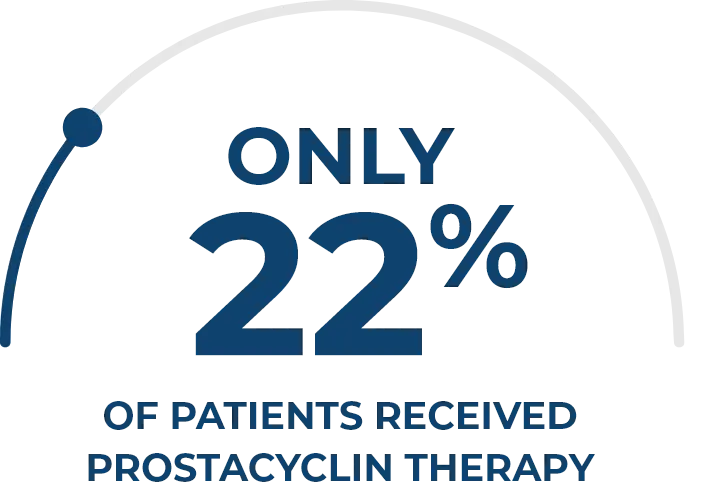
Data from a retrospective study of adult patients with PAH who were included in the Truven Commercial and Medicare databases between January 1, 2010, and October 31, 2015. Patients were identified based on claims with ICD-9-CM diagnoses indicative of PAH and claims for PAH-specific medications and PAH-related procedures. Annual cohorts of patients were identified for analysis.
PAH = pulmonary arterial hypertension
PREVIOUSLY EXISTING DELIVERY OPTIONS FOR PROSTACYCLIN THERAPY HAVE LIMITATIONS4,5
These limitations may make it difficult to initiate treatment and titrate to doses that provide full therapeutic benefit4,5
Oral6,7
KEY BENEFIT: CONVENIENT
LIMITATIONS
- Gastrointestinal, nervous, and vascular system side effects
- Requires up-titration, which may be challenging given side effects
Nebulized5,8
KEY BENEFIT: TARGETED
LIMITATIONS
- Burdensome, requiring time and effort
- Frequent administration and multiple breaths are required to achieve a therapeutic dose
- Few patients are prescribed more than 12 breaths QID
DPI9,10
KEY BENEFIT: CONVENIENT
LIMITATIONS
- High resistance/high effort device, placing burden on the patient’s inspiratory ability to deagglomerate the dry powder, which may result in drug particles of various sizes
- Position-dependent device, which may increase the risk of patient error, spillage, or wasted medication
Parenteral6,7,11
KEY BENEFIT: EFFECTIVE
LIMITATIONS
- Potential to cause systemic toxicities and infection
- Can result in injection site pain and lifestyle limitations
DPI = dry-powder inhaler; IV = intravenous; QID = four times daily; SC = subcutaneous
IN A RETROSPECTIVE CLINICAL ANALYSIS, HIGHER DOSES OF INHALED TREPROSTINIL SOLUTION WAS SHOWN TO IMPROVE DISEASE CONTROL5
In patients with PAH in a specialty pharmacy database (N = 5000), those taking >9 breaths QID had5,†,‡:
- Higher survival
rates - Longer time to transition
to parenteral therapy - Greater drug
persistence

Data from a Phase 4, retrospective, real-world analysis of patients prescribed inhaled treprostinil solution from a specialty pharmacy database between September 2009 and June 2018. Of the 6709 patients who met all study eligibility criteria, a random sample of 5000 patients was selected for further analysis using simple random sampling with equal probability.5
Compared with patients taking ≤9 breaths QID.5